
 Washington’s housing crunch is no longer ambiguous: the state needs roughly 1.1 million new homes over 20 years (about 55,000 units/year) to keep pace with population and job growth, but permitting is tracking far below that pace.
Microsoft President Brad Smith’s critique is not that demand is missing — it’s that the delivery system is structurally incapable of meeting demand fast enough, cheaply enough, or predictably enough. What Brad Smith says Washington is doing wrong1) Underbuilding — consistentlyWashington needs about 55,000 units/year statewide, while recent permitting trajectories have been materially below that pace. 2) Treating time as an afterthought (when time is money)Permitting and regulatory timelines add carrying costs, amplify financing risk, and kill feasibility. 3) Stacking costs until projects breakThe combined weight of land, labor, materials, interest rates, long timelines, and layered requirements pushes projects into “financially impossible” territory and drives developer capacity elsewhere. 4) Keeping large, well-located land effectively off-limitsSmith’s proposed direction is to “unlock” capacity by legalizing housing in underused commercial areas (strip malls, big-box sites, office parks, large parking lots), especially along frequent transit, making mixed-use housing the default rather than a political fight. Urbana Systems’ counter-model: more housing, no additional landUrbana Systems solves the “no land” constraint by shifting the unit of production from “new subdivision” to conversion throughput. A) Convert what’s already built (adaptive reuse at scale)Instead of chasing greenfield sites, Urbana Systems targets empty and underused buildings and converts them into mixed-use communities (housing + services + small-business space). This aligns with the “unlock underused commercial land” imperative — but executes it as a repeatable delivery pipeline rather than one-off redevelopment. B) Standardize, pre-approve, repeatWhere conventional development dies in bespoke design and multi-layer approvals, the conversion approach becomes industrializable:
C) Reduce cost-per-door by avoiding “land + entitlement” inflationNew construction often pays twice: once for scarce land, and again for entitlement delay. Conversions can remove or reduce both, especially when focused on jurisdictions that already support adaptive reuse pathways. D) Deliver mixed-use density where infrastructure already existsConversions concentrate housing where utilities, roads, transit, jobs, and services already are — avoiding the infrastructure cost spiral of sprawl while increasing “15-minute neighborhood” functionality. The Seattle and Washington State “hidden inventory” opportunity (Urbana Systems modeled impact)Urbana Systems’ vacancy-to-housing inventory analysis (modeled conversion yield based on empty-building counts and convertible square footage) indicates: Seattle (city level)
When new construction is required, Urbana Systems’ next stepAdaptive reuse is the fastest path to unlock stranded square footage now. But when the market requires ground-up delivery, Urbana Systems plans to deliver 10–20+ story prefabricated buildings (and higher where appropriate), with a targeted rollout approximately 2–3 years from now as the manufacturing and deployment pipeline matures. Utilities and sustainability: reduced infrastructure burdenUrbana Systems’ building systems are designed to reduce strain on municipal infrastructure:
By Walter Moss, CEO/Founder, Urbana Systems 2026-01-22 #HousingCrisis #HousingSupply #AffordableHousing #AdaptiveReuse #CommercialToResidential #UrbanRevitalization #InfillDevelopment #Prefabrication #ModularConstruction #AllElectricBuildings #WaterEfficiency #Sustainability #GreenBuilding #SmartCities #EconomicDevelopment #SmallBusiness #JobCreation #Seattle #WashingtonState #RealEstateDevelopment
0 Comments
 At Urbana Systems™, we hold a simple but radical truth: every building must be as unique as the community it serves. Where others see distressed commercial real estate, we see a canvas for originality. Each project becomes a one-of-one — singular, unrepeatable, and born of place. Standardized real estate has followed the logic of mass production: copy-paste designs, predictable layouts, neighborhoods stripped of identity. This sameness does not uplift — it erases. We refuse to participate in that erasure or theft. Our work is an answer to it. The One-of-One Revolution™, championed by JRO ART, rejects the algorithmic flattening of culture. We stand with this movement because its spirit is our own. Where JRO ART resists imitation in art, Urbana Systems™ resists duplication in housing. Both movements affirm one truth: originality is not indulgence — it is survival. 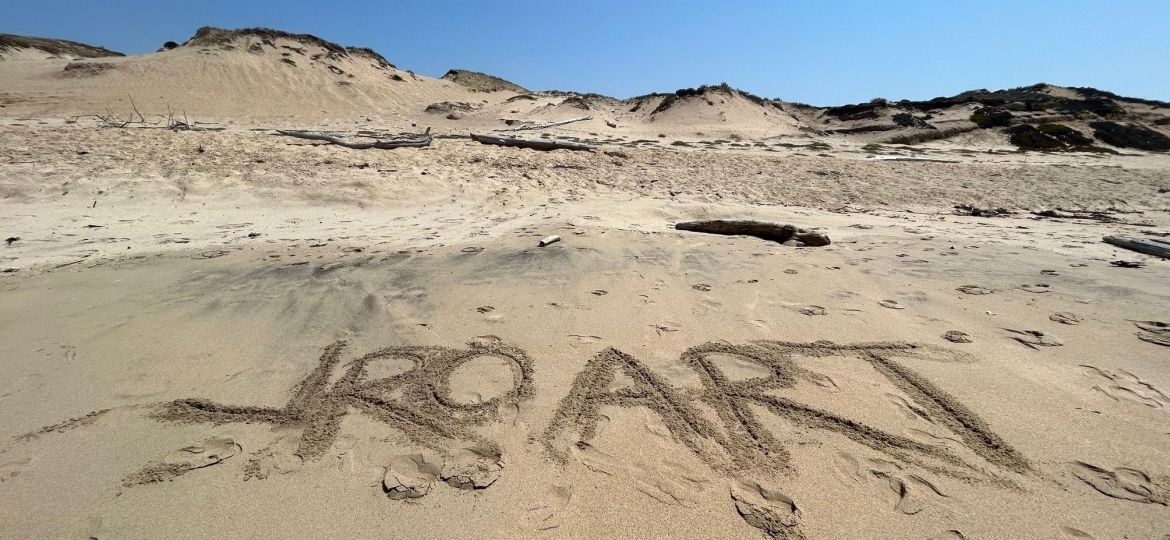 And here is what copycats of Urbana Systems™ cannot do: they cannot recreate our ethos. They can mimic words, borrow visuals, even chase after our systems — but they cannot reproduce the cultural integrity that defines us. Because originality is not a formula. It is not a checklist. It is a way of seeing, a way of building, a way of embedding meaning into every wall, every floor, every shared space. Copycats build shells. We build stories.
When we design as one-of-one, a building becomes more than shelter. It becomes identity, memory, and belonging made tangible. A SmartWalls™ tuned to local life, a storefront opened to lift neighborhood enterprise, a mural that carries history into the present — these are not decorative touches. They are acts of resistance against sameness. They are proof that authenticity cannot be replicated. The world is oversaturated with replicas. Culture itself risks drowning in imitation. But just as people turn to JRO ART for artworks that cannot be copied, families and communities turn to Urbana Systems™ for homes that cannot be duplicated. This is our defiance, our commitment, our contribution: to carve out originality where uniformity once ruled. The One-of-One Revolution™ is not just an artistic ideal. It is the future of how we live, how we gather, how we build culture that endures. Copycats will always trail behind — repeating, imitating, diluting. Urbana Systems™ will always stand ahead — creating what cannot be repeated. #UrbanaSystems #SmartWalls #OneOfOneRevolution #AdaptiveReuse #AffordableHomeownership #MixedUseDevelopment #Originality #Authenticity #JROART #CommunityDesign #UrbanRevitalization #SustainableLiving #ResilientCommunities #CulturalIntegrity #AntiCopycat #FutureOfHousing #ArchitecturalInnovation #UniqueHomes #PlaceBasedDesign #HousingRevolution  By Walter Moss
From countless conversations with founders, engineers, and developers in the AI space, to firsthand evaluations of platforms like Qbiq, we have found one consistent pattern. There is a concerning gap between the hype of AI in architecture and the actual, scalable results it delivers. While firms boast of generative floor plans or instant layouts, none have addressed the depth of issues tied to real-world deployment, large-scale housing needs, or the systemic inefficiencies plaguing real estate development. It is time to look beyond flashy demos and address the hard truths. Almost 40 years ago, we were already discussing the potential of software as a design partner. Tools that would assist architects in considering morphogenesis, morpho synthesis, physics, weather, sunlight, and an entire constellation of variables. The critical point then, and still today, is that these challenges require more than computational automation. What they require is human ingenuity. At the time, we coined a method called Unconventional Design, which employed informal strategies to solve complex problems, not just in architecture, but across general design, industrial design, and beyond. The Promise vs. Practicality Qbiq, for example, can generate office layouts in minutes, which on the surface seems revolutionary. But once deployed, its results still need human curation which often is handled from a third party. This step undermines the promise of full automation. Even worse, when we challenged them with the pressing need to generate viable housing layouts for fifteen million affordable homes, the response was dismissive. This is emblematic of a broader problem which is the lack of real commitment to solving systemic housing shortages. Many startups focus on narrow, repetitive outputs (office planning, interior staging, square-foot optimizations) without addressing permitting, zoning, code compliance, energy modeling, material coordination, or structural feasibility. These are not optional; they are foundational. The image above generated by Sora, should have designed according to its prompt, an ADA compliant kitchen. While aesthetically pleasing, it is full of errors. The jars are too high, and the oven is completely inaccessible for a person in a wheelchair. Design for Reality, Not Renderings Generative design tools still produce what we call "render-ready nonsense", aesthetically pleasing but operationally impossible. True AI integration must work within boundary conditions set by building codes, material availability, thermal and structural constraints, and mechanical routing. Tools must be capable of understanding and enforcing code compliance in all jurisdictions, not just generating pretty layouts. Until AI systems can simulate thermal loads, predict embodied energy, and map water, electric, HVAC, and smart infrastructure—while meeting accessibility and zoning laws— they are not designing buildings; they’re just sketching ideas. The Data Gap: Garbage In, Garbage Out Most current AI tools are trained on flawed or incomplete datasets. In the real estate domain, successful deployment demands access to:
Without ingesting and reasoning over this kind of multimodal data, AI will continue to be a glorified drafting assistant, not a system architect. Scalability is the Missing Link We don’t need AI to design a single home. We need AI systems that can:
Until AI can produce permit-ready, financially modeled, and structurally validated projects at scale, it’s a novelty, and not a necessity. Where AI Should Actually Be Focused Let’s shift the focus from vanity renderings and toward these real deliverables:
Final Thought: Architecting the Future Means Owning the Infrastructure. To create a future of sustainable, affordable homeownership at scale, we don’t need AI to replace architects—we need it to augment and accelerate what visionary architects and developers already do. But that means building the infrastructure behind AI itself: clean datasets, verifiable compliance engines, scalable design models, and urban policy-aware engines. Real estate is not disrupted by design aesthetics; it is transformed by systems. If AI is to become the architect of the future, it must first learn to build the systems architects depend on. About the Author Walter Moss is the Founder and Inventor behind Urbana Systems™, Urbana IQ™, SmartWalls™, and LabHabitat™. With 40+ years of cross-industry experience spanning architecture, manufacturing, polymers, information technology, software development, psychology, biology, and CAD/CAM, Walter has long pioneered systemic approaches to design, construction, and automation. He is on a mission to rewire how cities grow—unit by unit, code by code, and block by block. Urbana Systems™ is a private-sector leader in adaptive reuse, transforming distressed commercial properties into affordable, mixed-use communities through its proprietary Turnkey Conversion Solution™. Powered by SmartWalls™ technology and a systems-first approach, Urbana Systems delivers scalable, sustainable solutions to the housing crisis, faster and more cost-effectively than traditional development. |
AuthorUrbana Systems™ Turnkey Conversion Solutions™ Archives
January 2026
Categories |
 RSS Feed
Site powered by Weebly. Managed by WebHostingPad.com